Major Worm Phyla
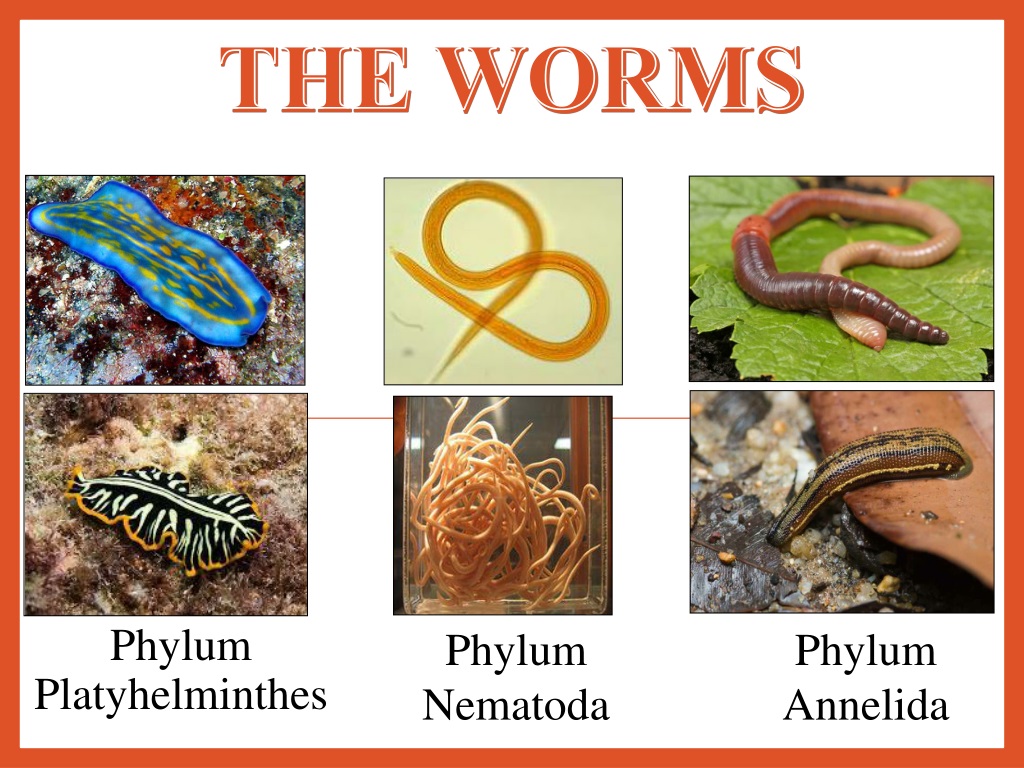
Three important phyla showing progressive complexity in body organization:
- Platyhelminthes
- Nematoda
- Annelida
Platyhelminthes vs Nematoda vs Annelida
| Feature | Platyhelminthes | Nematoda | Annelida |
|---|---|---|---|
| Body shape | Flat (dorso-ventrally flattened) | Cylindrical, unsegmented | Cylindrical, segmented |
| Body cavity | Acoelomate (no cavity) | Pseudocoelom | True coelom |
| Segmentation | Absent | Absent | Present (metamerism) |
| Cuticle | Absent | Present (thick, collagenous) | Absent (moist skin) |
| Setae/Chaetae | Absent | Absent | Present |
| Digestive system | Incomplete (one opening) | Complete (mouth + anus) | Complete |
| Circulatory system | Absent | Absent | Present (closed) |
| Excretion | Flame cells | Renette cells / excretory tubes | Segmental nephridia |
| Examples | Planaria, Tapeworm, Liver fluke | Ascaris, Pinworm, Filarial worm | Earthworm, Leech, Nereis |
3. Platyhelminthes (Flatworms)
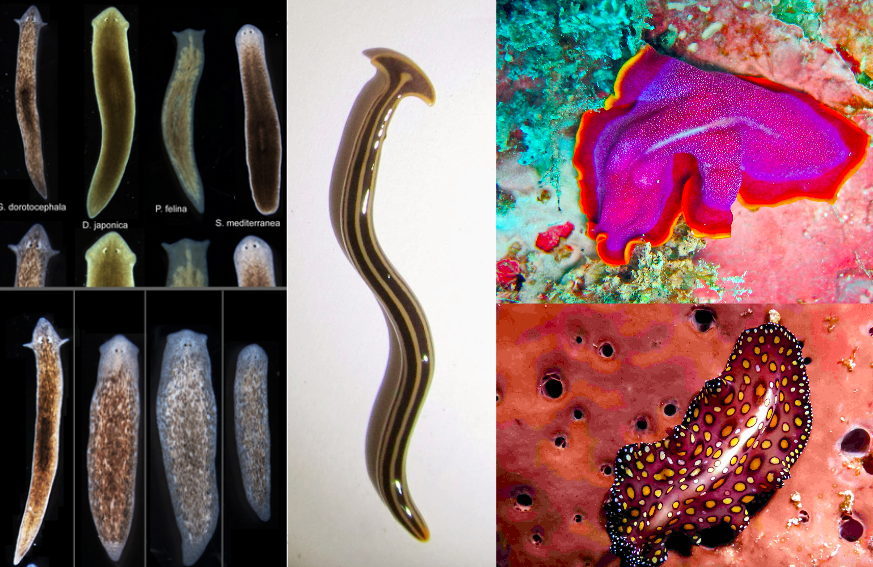
Simplest bilaterally symmetrical animals – acoelomate
- Acoelomate
- Mouth only
- Flame cells
- Parasitic forms common
- High regeneration
🪱 Flatworm Anatomy - Interactive Learning
🪱 Flatworm Structure
📚 Function Information
Click on any label to see its function and characteristics!
4. Nematoda (Roundworms)
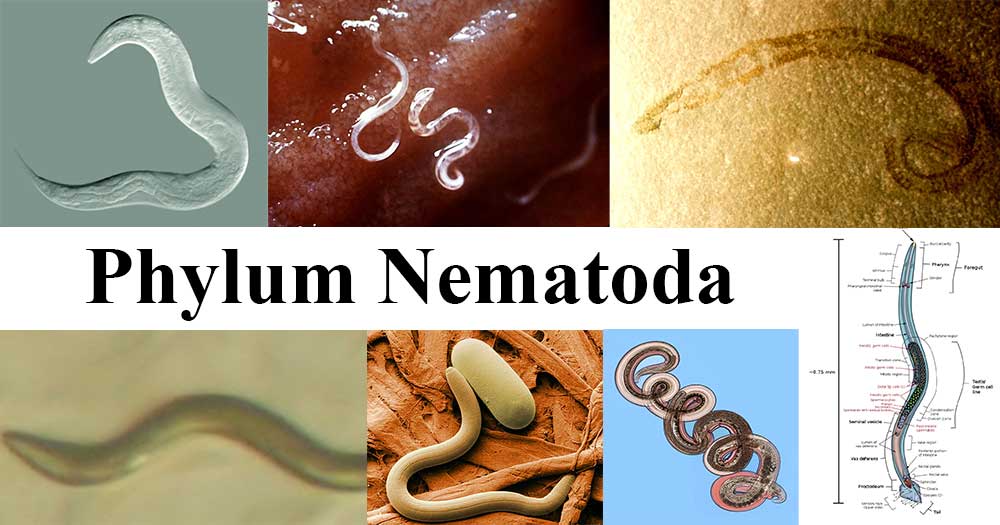
Pseudocoelomate – first animals with complete digestive tube
- Pseudocoelom
- Tube-within-tube
- Cuticle present
- Many parasites
- Simple organization
🪱 Ascaris Lumbricoides - Interactive Learning
♂️ Male Ascaris Lumbricoides
📚 Function Information
Click on any label to see its function and characteristics!
5. Annelida (Segmented worms)
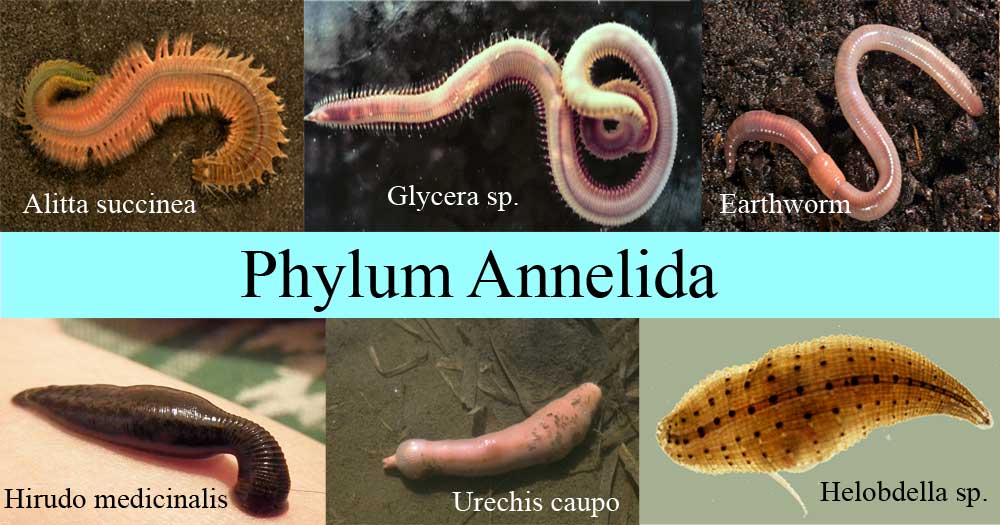
First true coelomates with metameric segmentation
- True coelom
- Metamerism
- Locomotory bristles
- Blood vessels present
- Soil ecosystem engineers
🪱 Earthworm Anatomy - Interactive Learning
🪱 Earthworm Internal Anatomy
📚 Function Information
Click on any label to see its function and characteristics!